



Medical Information Sources include government agencies, academic institutions, and professional organizations that provide peer-reviewed, evidence-based healthcare data. Trusted platforms like MedlinePlus and PubMed ensure patient safety and clinical accuracy, helping users avoid the serious risks of online health misinformation.
 Defining “reliable” in healthcare requires looking at the foundation of the content. A trustworthy Medical Information Sources platform relies on scientific evidence rather than anecdotal experiences, personal opinions, or unverified claims. The credibility of information depends on how closely it aligns with established medical research and clinical guidelines.
University hospitals and medical centers produce some of the most accurate medical information platforms available to the public. For example, organizations like the Mayo Clinic Health System publish detailed, patient-friendly articles written and reviewed by practicing physicians. Research databases also fall into this category. They house the primary literature that clinical guidelines rely upon, offering unfiltered access to scientific discovery.
Why are government health agencies highly trusted?
Government agencies exist to protect public health, making them incredibly reliable health information websites. The National Institutes of Health (NIH) conducts and funds medical research globally. The Centers for Disease Control and Prevention (CDC) provides vital data on infectious diseases and public health guidelines. Additionally, the National Library of Medicine (NLM) operates platforms designed specifically for patient education.
What role do professional medical organizations play?
Professional medical organizations represent practicing clinicians and specialists. The American Medical Association (AMA) publishes extensive guidelines and ethical standards for medical practice. Specialty-specific organizations, such as the American Heart Association and the American Cancer Society, offer deep, authoritative insights into specific disease categories. These organizations regularly update their guidelines based on the latest clinical evidence.
How do reputable non-profit health organizations contribute?
Non-profit organizations often focus on patient advocacy and education. While platforms offering a WebMD symptom checker can be useful for initial understanding, users should approach them with appropriate caveats. Such tools help formulate questions for a doctor but should never replace a professional diagnosis. Other well-known health advocacy groups provide community support and education for specific chronic conditions.
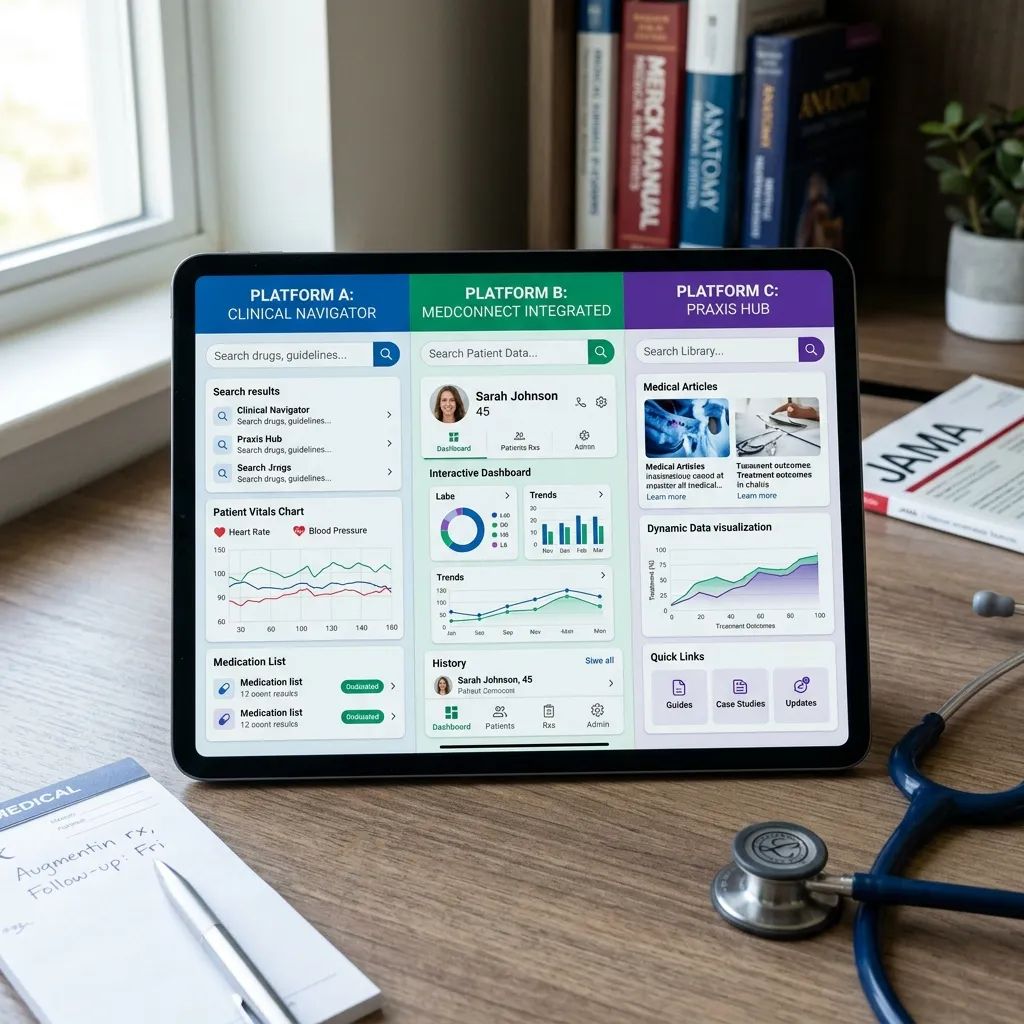 Different Medical Information Sources serve different audiences and purposes. Patients typically need simplified, easy-to-understand summaries, while healthcare professionals require detailed clinical data, research findings, and treatment guidelines. Because of this difference, no single platform fits all needs. Instead, each type of medical information platform plays a unique role in supporting healthcare knowledge and decision-making.
How do you navigate MedlinePlus effectively?
MedlinePlus is a service of the National Library of Medicine. It serves as your gateway to comprehensive health information, entirely free of commercial endorsement. The platform covers diseases, conditions, and wellness issues in plain language. You can utilize MedlinePlus effectively by searching for specific drug information, watching medical encyclopedias, and accessing tutorials. It offers specific features for patients, including easy-to-read summaries, while providing professionals with a reliable tool for patient education.
Why is PubMed Clinical Research considered the gold standard?
PubMed clinical research is a free search engine accessing the MEDLINE database of references and abstracts on life sciences and biomedical topics. It represents the gold standard for scientific literature. Effective searching requires using specific keywords, MeSH (Medical Subject Headings) terms, and applying filters for clinical trials or systematic reviews. Understanding research articles and abstracts on PubMed allows you to trace medical claims back to their original scientific source.
How do clinicians utilize an UpToDate login?
An UpToDate login provides clinicians with access to an essential, subscription-based clinical decision support resource. UpToDate’s role in clinical practice is profound. Medical experts continuously review the latest evidence to provide actionable recommendations for patient care. Access and subscription models are typically managed through hospitals or academic institutions. Clinicians leverage UpToDate for decision-making at the point of care, ensuring their treatments align with current global standards. Choose UpToDate if clinical accuracy and peer-reviewed treatment protocols matter more than generalized patient summaries.
What makes the Mayo Clinic Health System patient-centric?
The Mayo Clinic offers an integrated healthcare approach that translates seamlessly to its digital platforms. Their online portal serves as a patient-centric resource, providing extensive patient education resources and guides. Users can research symptoms, learn about complex diseases, and find information on preparing for medical appointments. Furthermore, the platform helps users understand ongoing research and clinical trials, bridging the gap between clinical practice and patient awareness.



Finding and using reliable Medical Information Sources is essential for making safe and informed health decisions. In a digital world filled with both accurate data and misinformation, the ability to critically evaluate medical content has become a vital skill for everyone. By understanding how to identify trustworthy platforms, apply evaluation methods like the CRAAP test, and recognize red flags, individuals can significantly reduce the risk of acting on false or misleading health advice.
Strong Medical Information Sources are built on scientific evidence, expert review, and transparency. When combined with proper search habits—such as using precise medical terms, relying on reputable domains, and cross-referencing information—users can confidently navigate complex healthcare topics.
