


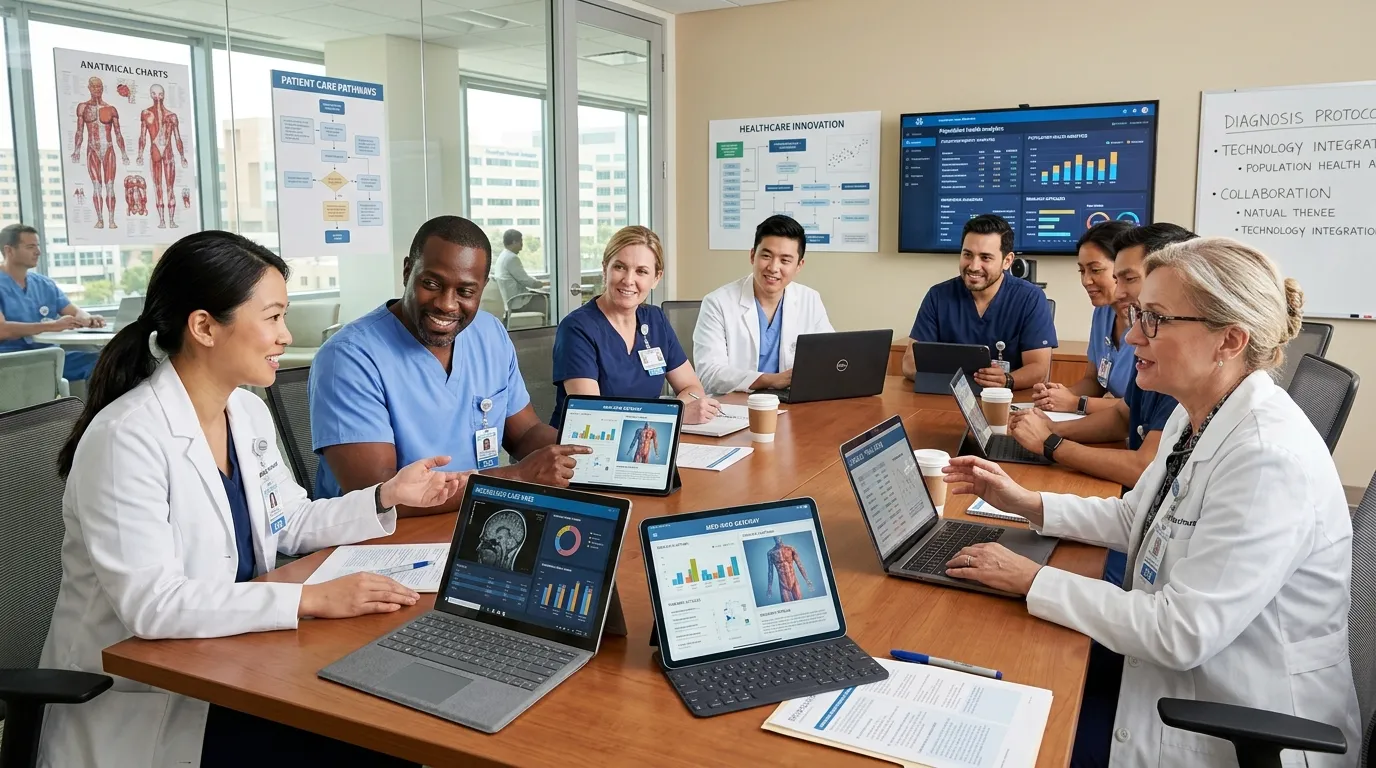
The volume of medical knowledge published every year is staggering. According to the National Library of Medicine, PubMed indexes over one million new biomedical citations annually. No individual clinician, no matter how experienced, can absorb that volume of information through traditional reading alone. This is the central problem that medical knowledge platforms are built to solve.
Healthcare organizations—from large hospital systems to independent specialty clinics—are turning to digital medical knowledge platforms to manage, curate, and deliver clinical information at the point of care. These systems don’t just store information. They connect it to clinical workflows, personalize it for individual users, and increasingly use artificial intelligence to surface the right guidance at the right moment.
For healthcare professionals, a well-implemented medical knowledge platform means fewer knowledge gaps at critical decision points. For administrators and healthcare leaders, it means measurable improvements in diagnostic quality, workflow efficiency, and staff development. For patients, the downstream effect is safer, more consistent care.
This guide covers every dimension of medical knowledge platforms: what they are, how they differ, what features matter, how they benefit organizations, what challenges to expect, and where the technology is heading. Whether you are evaluating platforms for a large health system, a specialty clinic, or an academic institution, the information here will help you make a better-informed decision.
What Are Digital Medical Knowledge Platforms and Why Do They Matter?
The Evolving Landscape of Healthcare Information
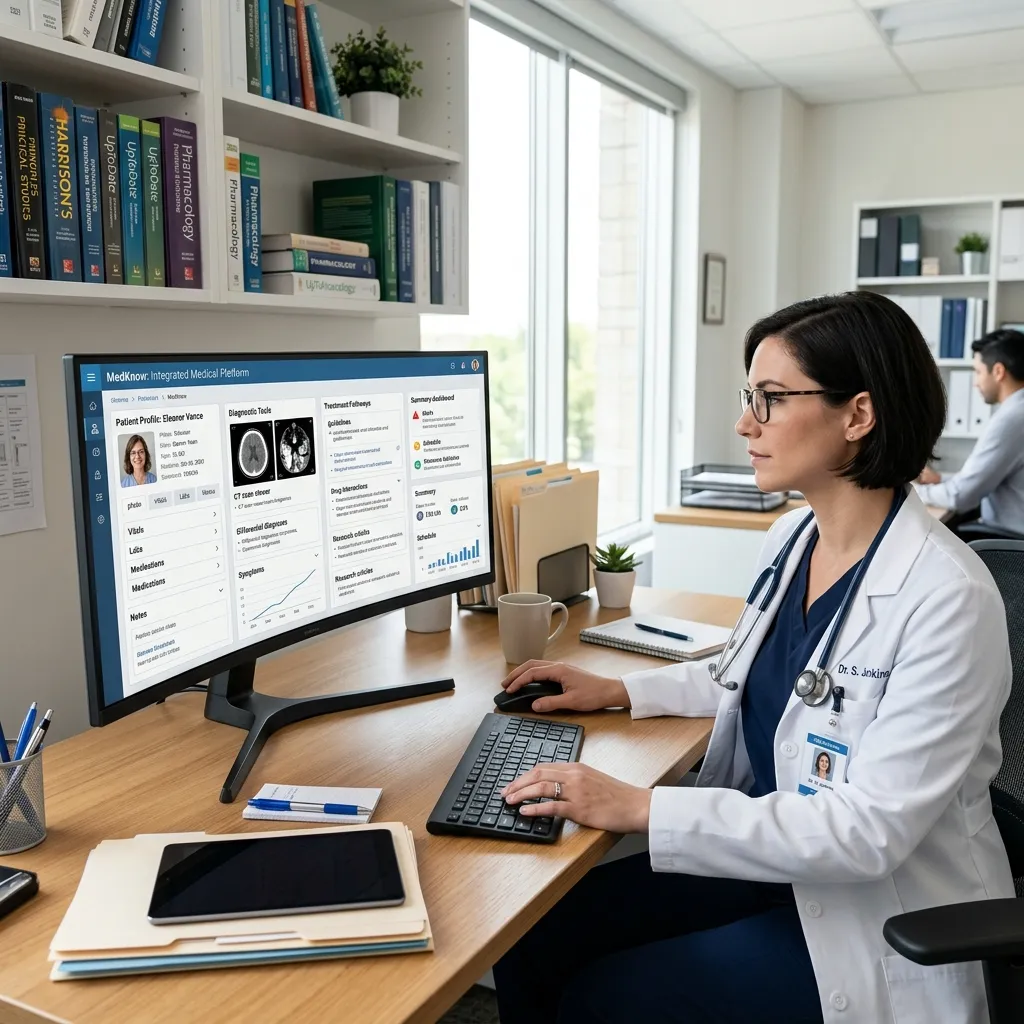
Healthcare information has always been abundant. What has changed is the speed at which it evolves, the complexity of managing it, and the stakes associated with acting on outdated knowledge. Clinical guidelines are revised regularly. Drug interactions are discovered post-approval. New diagnostic criteria replace old ones. A healthcare knowledge management system provides the infrastructure to keep this information current and accessible.
The shift from paper-based resources to digital medical knowledge platforms has also changed expectations. Clinicians now expect to search, retrieve, and apply clinical knowledge within seconds—not hours. Administrators expect platforms to integrate with existing systems rather than sit in isolated silos. And regulatory bodies increasingly expect organizations to demonstrate that clinical decisions are grounded in evidence-based guidance.
Defining Digital Medical Knowledge Platforms
A medical knowledge platform is a digital system designed to capture, organize, validate, and deliver health-related information to users across a healthcare organization. The term is broad by design. It encompasses clinical decision support systems embedded in EHRs, standalone online medical information platforms used for education and research, specialty-specific databases, and internal knowledge bases built for individual clinics.
What distinguishes a medical knowledge platform from a simple database is the layer of intelligence applied to the information. Modern platforms do not simply store content—they contextualize it, link it to clinical scenarios, and deliver it in response to specific queries or workflow triggers.
Why Medical Knowledge Platforms Matter for Professionals and Patients
The case for medical knowledge platforms rests on a straightforward premise: better access to accurate, current information leads to better clinical decisions. Research published in the Journal of the American Medical Informatics Association consistently links clinical decision support to reductions in medication errors and improvements in adherence to evidence-based guidelines.
For patients, this translates to tangible outcomes—fewer adverse drug events, more consistent diagnoses, and treatment plans aligned with current best practice. For healthcare professionals, online medical information platforms reduce the cognitive burden of staying current, freeing clinical attention for the human dimensions of care that technology cannot replicate.
What Are the Main Types of Medical Knowledge Platforms?
What Is a Clinical Decision Support System?
A clinical decision support system is a medical knowledge platform designed to assist clinicians in making decisions at the point of care. Clinical decision support systems analyze patient data from the EHR—demographics, diagnoses, medications, lab results—and cross-reference it against clinical knowledge bases to generate alerts, recommendations, and diagnostic suggestions.
These systems operate in two primary modes. Active decision support pushes alerts or notifications to the clinician during the workflow—for example, flagging a potential drug-drug interaction when a prescription is entered. Passive decision support makes knowledge available on demand, allowing clinicians to query the system when they need guidance rather than receiving unsolicited alerts.
Clinical decision support has demonstrated measurable impact. A systematic review published in the BMJ found that clinical decision support systems reduced prescribing errors by up to 80% in some settings. The specificity of this effect depends heavily on the quality of the underlying clinical knowledge base and the design of the alert logic.
How Do EHRs with Integrated Knowledge Bases Function?
Electronic health records with integrated knowledge bases represent one of the most widely deployed forms of medical knowledge platform in institutional settings. Platforms such as the Epic clinical knowledge base embed clinical reference content—drug information, diagnostic guidance, care protocols—directly into the EHR interface. Clinicians access this information without leaving the workflow environment they use to document and manage patient care.
The integration model offers two significant advantages. First, it reduces the friction associated with switching between systems. Second, it enables the EHR to automatically surface relevant knowledge based on what the clinician is currently doing—ordering a medication, reviewing a lab result, or entering a diagnosis code.
The limitation of this model is dependency on the EHR vendor’s content partnerships and update cycles. Organizations that rely entirely on an EHR-integrated knowledge base may find themselves constrained by the platform’s content agreements or refreshed on a schedule that does not align with clinical guideline updates.
What Do Online Medical Information Platforms Offer for Education and Research?
Online medical information platforms serve a broader audience than clinical decision support systems. Resources such as PubMed, UpToDate, and medical learning platforms provide structured access to peer-reviewed literature, clinical guidelines, case reports, and educational content for both practicing clinicians and learners.
These platforms support professional development, research activity, and the kind of deep reading that builds foundational clinical knowledge. They are particularly valuable for trainees, academic clinicians, and specialists who need to stay current with developments in their field. The medical learning platforms that combine structured curricula with evidence-based reference content provide a hybrid approach that serves both learning and practice needs.
What Are Specialty-Specific Medical Knowledge Platforms?
Not all medical knowledge platforms are designed for generalist use. Specialty-specific platforms—used in radiology, oncology, cardiology, dermatology, and other disciplines—deliver highly targeted clinical knowledge tailored to the decision-making environment of a particular specialty.
A radiology-specific medical knowledge platform might integrate imaging libraries, structured reporting templates, and differential diagnosis tools directly into the picture archiving and communication system (PACS). An oncology platform might deliver chemotherapy dosing calculators, clinical trial matching tools, and tumor board support resources within a single interface.
The value of a specialty-specific platform lies in the depth and precision of its content. A broad clinical knowledge base covers the general landscape of medicine, but specialty platforms provide the granular detail that subspecialists need at the point of care.
What Is an Internal Knowledge Base for Clinics?
An internal knowledge base for clinics is an organization-specific repository of policies, procedures, protocols, formulary information, and institutional guidelines. Unlike commercial medical knowledge platforms that deliver third-party content, an internal knowledge base houses the information that is specific to how a particular clinic or health system operates.
Internal knowledge bases address the gap between generalized clinical guidance and the operational realities of a specific practice environment. Local formulary restrictions, facility-specific protocols, and regional epidemiological patterns all require customized knowledge resources. A well-maintained internal knowledge base ensures that clinicians are working from institution-specific information rather than relying solely on generic guidelines that may not align with local context.
What Key Features Define an Effective Healthcare Knowledge Management System?
How Do Search and Retrieval Capabilities Affect Clinical Use?
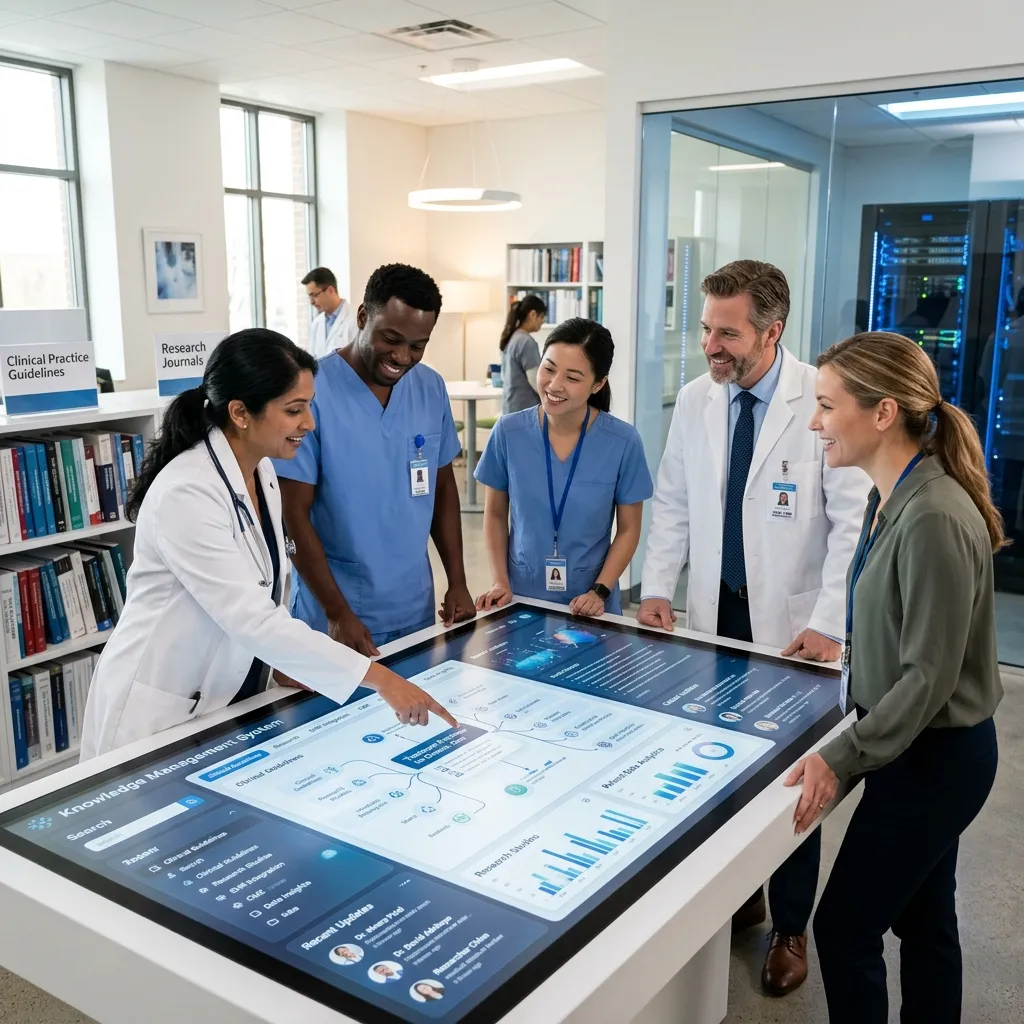
Search quality is one of the most critical determinants of whether a medical knowledge platform is actually used at the point of care. Clinicians operate under time pressure. A platform that requires multiple steps, complex navigation, or multiple login processes will be abandoned in favor of a faster alternative—often a general-purpose internet search that lacks the clinical validation of a purpose-built resource.
Effective search in a healthcare knowledge management system must handle clinical terminology, abbreviations, brand and generic drug names, ICD codes, and natural language queries. Natural language processing capabilities allow platforms to interpret clinical questions as they are actually posed, rather than requiring users to formulate precise keyword queries.
What Does Content Curation and Validation Involve?
The credibility of a medical knowledge platform depends entirely on the quality of its content. Content curation in this context means selecting, organizing, and regularly reviewing information to ensure it remains accurate, current, and relevant. Validation involves subjecting content to peer review, editorial oversight, and systematic comparison against published clinical guidelines and regulatory standards.
Platforms that delegate content responsibility to automated aggregation without human editorial oversight carry significant risks. Outdated dosing information, superseded diagnostic criteria, or withdrawn drug approvals can cause direct patient harm if they surface through a clinical decision support system without appropriate validation.
How Do Personalization and Customization Improve Platform Adoption?
A pediatric nurse practitioner and a cardiologist have fundamentally different information needs, even within the same health system. Effective digital medical knowledge platforms allow users to configure their experience based on role, specialty, workflow context, and personal preference.
Personalization can operate at the individual level—allowing clinicians to save frequently accessed resources, set content preferences, and configure alert thresholds. It can also operate at the organizational level—enabling administrators to define which content modules are visible to which user groups, and which institutional protocols take precedence over generic guidance.
What Does Integration with Clinical Workflows Require?
A medical knowledge platform that exists outside the clinical workflow requires a deliberate act of switching from the primary work environment to access information. This switching has a cost—measured in seconds and in cognitive load—that discourages use precisely when it is most needed.
Effective integration means that knowledge is accessible within the systems clinicians already use. This includes EHR integration through standards such as FHIR (Fast Healthcare Interoperability Resources) and HL7, single sign-on to reduce login friction, and contextual delivery of content based on the patient data currently open in the EHR.
What Role Does AI Play in Healthcare Knowledge Management Systems?
Artificial intelligence is transforming what healthcare knowledge management systems are capable of. Machine learning algorithms analyze patterns in clinical data to identify decision points where knowledge support is most likely to improve outcomes. Natural language processing enables platforms to understand clinical queries, extract meaning from unstructured notes, and generate summaries of complex evidence.
AI-powered clinical decision support can move beyond reactive alert systems—which fire after a clinician has already made a decision—toward proactive knowledge delivery that anticipates information needs before they arise. This shift from reactive to anticipatory support represents one of the most significant advances in medical knowledge platform design.
What Are the Benefits of Implementing Medical Knowledge Platforms?
How Do Medical Knowledge Platforms Improve Diagnostic Accuracy and Treatment Outcomes?
The most direct benefit of a medical knowledge platform is the reduction in diagnostic and prescribing errors. When clinicians have immediate access to current clinical guidelines, drug information, and differential diagnosis support, the rate of errors associated with knowledge gaps decreases measurably.
Studies examining the implementation of clinical decision support systems in hospital settings have documented reductions in adverse drug events, improved adherence to evidence-based preventive care guidelines, and faster time-to-diagnosis for complex presentations. These improvements compound over time as platforms learn from institutional data and refine the relevance of their guidance.
How Do These Platforms Enhance Clinical Efficiency and Workflow Optimization?
Beyond accuracy, online medical information platforms save time. Clinicians who can retrieve a drug dosing calculation, check a clinical guideline, or access a procedural protocol within their existing workflow spend less time switching between systems and more time with patients.
At the organizational level, this efficiency compounds across hundreds of clinical encounters per day. A health system that reduces the average time clinicians spend searching for clinical information by three minutes per encounter, across 500 daily encounters, recovers over 25 hours of productive clinical time each day.
What Role Do These Platforms Play in Continuous Professional Development?
Medical knowledge platforms that integrate educational content with clinical reference material support continuous professional development without requiring clinicians to step away from their practice environment. When a clinician encounters an unfamiliar diagnosis or procedure, an integrated platform can surface not only the immediate clinical guidance but also background educational content that deepens understanding.
This approach aligns with the model of learning at the point of care—acquiring knowledge in context, where it is immediately applicable. Platforms that connect clinical reference content with structured learning pathways support the ongoing development requirements that most licensing bodies place on practicing clinicians.
How Do Medical Knowledge Platforms Facilitate Research and Innovation?
Access to comprehensive, searchable clinical knowledge databases accelerates research activity at every level—from individual clinicians asking clinical questions to academic institutions conducting systematic reviews. Online medical information platforms that aggregate peer-reviewed literature, preprint research, and clinical trial registries reduce the time required to conduct thorough literature searches and identify research gaps.
For health systems that support clinical research, integrated knowledge platforms can facilitate protocol development, support investigator training, and connect clinical teams with the evidence base relevant to their research questions.
What Cost Reduction and Resource Optimization Benefits Can Organizations Expect?
The financial case for medical knowledge platforms is built on several measurable outcomes. Reduced adverse drug events decrease the cost of managing preventable complications. Improved diagnostic accuracy reduces unnecessary testing and the downstream costs of misdiagnosis. Faster access to clinical guidance reduces the time clinicians spend searching for information they need to proceed.
One analysis published in Health Affairs estimated that preventable medical errors cost the US healthcare system over $20 billion annually. Clinical decision support, as a component of a broader medical knowledge platform strategy, addresses a significant portion of the errors that drive this cost.
What Challenges Do Organizations Face When Implementing Medical Knowledge Platforms?

How Do Organizations Manage Data Overload and Information Fatigue?
The paradox of comprehensive medical knowledge platforms is that access to more information can create its own burden. Alert fatigue—the tendency for clinicians to override or ignore clinical decision support alerts when they fire too frequently—is one of the most well-documented challenges in healthcare knowledge management systems.
Research published in the Journal of the American Medical Informatics Association found that clinicians override up to 96% of drug alerts in some EHR implementations. The solution is not fewer alerts but smarter alerts—targeted, specific, and high-confidence notifications that add genuine value rather than interrupting the workflow with obvious or low-priority information.
What Data Security and Privacy Considerations Apply to These Platforms?
Medical knowledge platforms that integrate with EHR systems and access patient data must meet the data security and privacy standards that govern protected health information. In the United States, this means HIPAA compliance. In the European Union, GDPR applies. Both regulatory frameworks impose requirements on data storage, access controls, encryption, and breach notification.
Organizations evaluating digital medical knowledge platforms should assess not only the clinical quality of the content but also the security architecture of the platform. Vendors should be able to provide documentation of their compliance posture, penetration testing results, and incident response procedures.
Why Is Interoperability Such a Persistent Challenge?
Healthcare organizations rarely operate a single system. The typical health system runs multiple EHR instances, laboratory systems, pharmacy platforms, imaging systems, and administrative applications. A medical knowledge platform that cannot exchange data with these systems—or that requires extensive custom integration work to do so—adds complexity rather than reducing it.
The adoption of FHIR as a healthcare interoperability standard has improved the landscape considerably. Platforms built on FHIR-compliant APIs can exchange structured clinical data with a wider range of systems than was possible a decade ago. However, legacy infrastructure in many healthcare organizations creates ongoing interoperability challenges that no single platform can fully resolve.
How Do Organizations Keep Content Current and Accurate?
Clinical guidelines evolve. Drug approvals change. New evidence replaces established practice. A medical knowledge platform is only as valuable as the currency of its content. Organizations that invest in a platform must also commit to a content maintenance strategy—either relying on the vendor’s editorial update cycle or maintaining internal processes for reviewing and refreshing institution-specific content.
For internal knowledge bases for clinics, content maintenance is often the responsibility of clinical leadership and subject matter experts within the organization. Establishing clear ownership of each content domain, along with a defined review schedule, is essential for keeping the platform credible and useful.
What Does Successful User Adoption Require?
A medical knowledge platform that clinicians do not use delivers no value regardless of its technical sophistication. User adoption is shaped by workflow integration quality, search performance, content relevance, and—critically—training.
Effective onboarding programs introduce clinicians to the platform in the context of their specific workflows rather than through generic feature demonstrations. Champions within clinical departments who advocate for and model platform use accelerate broader adoption. Continuous feedback loops between end users and platform administrators allow for iterative improvement that increases relevance over time.
Case Studies: How Medical Knowledge Platforms Perform in Practice
How Have Hospital Systems Benefited from Medical Knowledge Platform Implementation?
Large hospital systems that have implemented integrated clinical decision support and healthcare knowledge management systems report consistent improvements in medication safety metrics, clinical guideline adherence, and time-to-treatment for time-sensitive conditions.
One well-documented example is the implementation of sepsis alert systems within EHR-integrated knowledge platforms. Hospitals that deployed automated sepsis detection algorithms—cross-referencing vital signs, lab results, and clinical documentation against sepsis recognition criteria—demonstrated measurable reductions in sepsis mortality and in time to antibiotic administration. The knowledge infrastructure that makes this possible is a direct application of clinical decision support embedded within a broader medical knowledge platform.
How Are Academic Institutions Using These Platforms?
Academic medical centers use medical knowledge platforms at two levels simultaneously. Clinically, they support diagnostic and therapeutic decision-making for a patient population that often includes complex, multi-morbid cases. Academically, they provide the information infrastructure for teaching, research, and scholarly activity.
Platforms that serve both functions—delivering point-of-care clinical guidance while also supporting literature search and research workflows—are particularly valuable in academic settings. The ability to move fluidly between clinical reference content and primary research literature supports the kind of evidence synthesis that distinguishes academic medical practice.
What Do Individual Practitioners Gain from These Platforms?
For clinicians in independent or small group practice, medical knowledge platforms provide access to resources that were previously available only to those affiliated with large institutions. A family physician working in a solo practice can access the same clinical decision support tools, drug interaction databases, and evidence-based guidelines as a clinician employed by a major health system—provided they have access to the right platform.
This democratization of clinical knowledge resources is one of the most significant equity implications of digital medical knowledge platforms. It supports consistent, high-quality care regardless of the organizational size or geographic location of the practice.
What Does the Future of Medical Knowledge Platforms Look Like?

How Will Advances in AI and Natural Language Processing Transform These Platforms?
The near-term future of medical knowledge platforms is defined by the maturation of large language models and natural language processing capabilities. Platforms that can interpret a clinician’s free-text query—posed in the language of clinical practice rather than structured database terminology—and return a precise, evidence-grounded answer represent a qualitative advance over current search-based interfaces.
AI systems trained on curated clinical knowledge bases can also generate synthesized answers to complex clinical questions, drawing from multiple sources and presenting an integrated response rather than a list of links. The challenge for platform developers is ensuring that AI-generated responses are accurate, up-to-date, and traceable to validated sources.
What Will Predictive Analytics and Personalized Medicine Mean for These Platforms?
As healthcare knowledge management systems develop the capability to analyze patterns in population-level and individual-level clinical data, their role will shift from reference tool to predictive instrument. A platform that identifies a patient’s elevated risk for a specific condition based on their EHR data—and proactively delivers relevant prevention guidance to the clinician—moves from passive knowledge delivery to active clinical partnership.
This capability aligns with the broader movement toward personalized medicine: treatment and prevention strategies tailored to the individual patient’s genetic profile, clinical history, and risk factors rather than derived solely from population-level averages.
What Role Could Blockchain Play in Ensuring Data Integrity?
Blockchain technology offers a potential solution to one of the persistent challenges in medical knowledge management: ensuring that the provenance and integrity of clinical information can be verified and that the history of content changes is transparent and auditable.
A blockchain-anchored knowledge base would allow any user to verify when a piece of clinical content was last updated, who authorized the update, and what the previous version contained. This transparency is particularly valuable for regulatory submissions, legal proceedings, and quality assurance processes where the currency and integrity of clinical guidance must be demonstrable.
How Can Medical Knowledge Platforms Support Global Accessibility and Equity?
The global distribution of medical knowledge remains deeply unequal. Clinicians in high-income settings have access to sophisticated, curated digital medical knowledge platforms. Clinicians in low-resource settings often lack reliable internet access, let alone subscription access to comprehensive clinical reference platforms.
Initiatives that prioritize offline accessibility, low-bandwidth functionality, and multilingual content have the potential to extend the benefits of medical knowledge platforms to underserved clinical environments. Organizations such as the World Health Organization have invested in open-access clinical knowledge resources that address this gap, but significant disparities remain.
The Imperative for Healthcare Transformation Through Medical Knowledge Platforms
The healthcare sector faces a fundamental tension: clinical knowledge is growing faster than any individual can manage, while the consequences of acting on outdated or incomplete information remain severe. Medical knowledge platforms resolve this tension by building the infrastructure to manage, curate, and deliver clinical knowledge at scale—connecting the right information to the right clinician at the right moment.
The organizations that invest in these platforms today are building a competitive and clinical quality advantage that will compound over time. As AI capabilities mature, as interoperability standards solidify, and as the evidence base for platform-driven quality improvement grows, digital medical knowledge platforms will shift from a differentiator to a foundational expectation.
Healthcare transformation does not happen through technology alone. It happens when clinical leaders, technology teams, and frontline professionals commit to using the tools available to deliver consistently excellent care. A well-implemented medical knowledge platform is one of the most powerful tools currently available for that purpose.
For organizations looking to deepen their understanding of how digital infrastructure supports clinical quality, exploring the broader landscape of clinical knowledge base resources and clinical decision support knowledge base applications provides a strong foundation for strategic planning.
How Medical Knowledge Platforms Improve Patient Safety
Medical knowledge platforms significantly improve patient safety by ensuring that healthcare professionals have immediate access to accurate, evidence-based clinical information at the point of care. In modern healthcare systems, where decisions often need to be made quickly, these platforms reduce reliance on memory and outdated references.
One of the most important safety benefits is the reduction of medical errors. Clinicians can instantly check drug interactions, correct dosages, allergies, and contraindications before prescribing medication. This helps prevent adverse drug events, which are a major cause of preventable harm in hospitals.
These platforms also support clinical decision-making by providing real-time guidelines, diagnostic support, and treatment recommendations. This ensures that patients receive care based on the latest medical research and best practices rather than outdated knowledge.
In emergency situations, medical knowledge platforms provide instant access to life-saving protocols such as CPR, trauma care, and sepsis management. This immediate availability of information can directly impact patient survival.
Overall, these platforms act as a safety layer in healthcare systems by reducing human error, standardizing treatment approaches, and improving the accuracy of clinical decisions, ultimately leading to better patient outcomes.
Role of AI in Modern Clinical Knowledge Systems
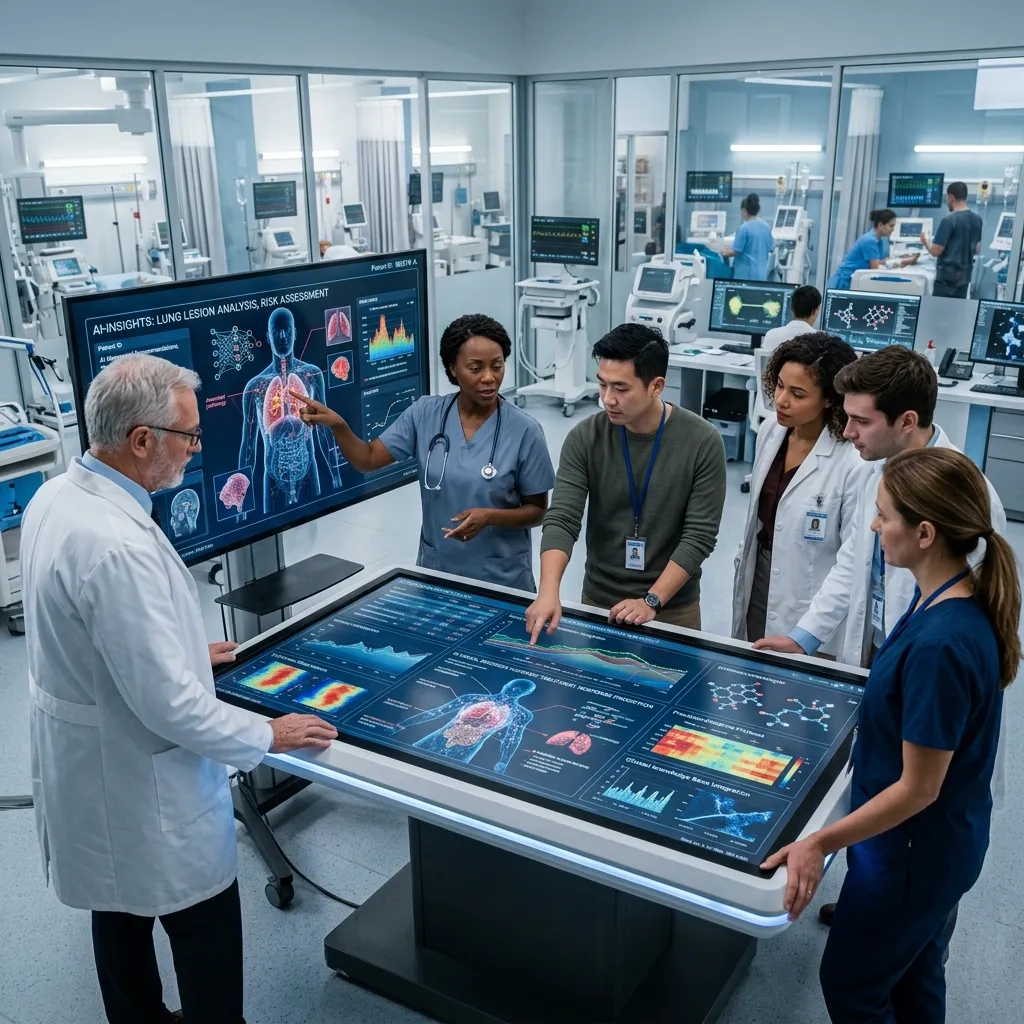 Artificial intelligence is transforming medical knowledge platforms into intelligent, adaptive systems that support faster and more accurate clinical decision-making. Unlike traditional databases, AI-powered systems analyze large volumes of medical data to generate meaningful insights in real time.
One key role of AI is natural language processing, which allows clinicians to search medical information using simple, conversational queries. Instead of using complex keywords, healthcare professionals can ask questions in plain language and receive precise, context-aware answers.
AI also enhances predictive analytics by identifying patients at risk of developing serious conditions such as sepsis, diabetes complications, or heart disease. By analyzing patient history, lab results, and clinical patterns, AI can alert clinicians before conditions worsen, enabling early intervention.
Another important function is personalization. AI tailors medical recommendations based on individual patient data, including genetics, lifestyle, and previous treatments. This supports the shift toward personalized medicine, where care is customized for each patient.
Additionally, AI continuously updates medical knowledge platforms by scanning new research, clinical trials, and global medical literature. This ensures that clinicians always have access to the latest and most relevant information, improving both efficiency and accuracy in healthcare delivery.
Integration of Medical Knowledge Platforms with EHR Systems
Integration with Electronic Health Records (EHR) is one of the most important features of modern medical knowledge platforms. This integration allows clinicians to access clinical guidelines, drug information, and decision support tools directly within the patient’s medical record system.
Instead of switching between multiple systems, healthcare professionals can view relevant knowledge in the same interface where they document patient data. This reduces workflow disruption and saves valuable time during clinical decision-making.
EHR integration also enables context-aware recommendations. For example, if a doctor enters a patient’s symptoms or lab results, the system can automatically suggest possible diagnoses, treatment options, or warnings about drug interactions. This improves accuracy and reduces the risk of oversight.
Another major advantage is improved data consistency. When knowledge platforms are integrated with EHRs, updates in clinical guidelines are reflected immediately in patient care workflows. This ensures that treatment decisions are always based on the most current evidence.
Overall, EHR integration transforms medical knowledge platforms into real-time clinical assistants, helping healthcare providers make faster, safer, and more informed decisions directly at the point of care.
Importance of Evidence-Based Medicine in Knowledge Platforms
Evidence-based medicine is the foundation of all reliable medical knowledge platforms. It ensures that clinical recommendations are based on scientifically validated research rather than assumptions or outdated practices.
These platforms continuously update their databases using peer-reviewed journals, clinical trials, and global health guidelines. This allows healthcare professionals to rely on the most current and accurate medical evidence when making decisions.
By following evidence-based principles, medical knowledge platforms reduce variation in clinical practice. Different doctors treating similar conditions are more likely to follow consistent protocols, leading to standardized and improved patient care outcomes.
Evidence-based systems also help reduce medical errors by eliminating outdated or incorrect treatment methods. Clinicians are guided toward therapies that have been tested and proven effective, improving both safety and treatment success rates.
In addition, these platforms support continuous learning by allowing healthcare professionals to explore the scientific basis behind clinical recommendations. This strengthens medical knowledge and improves decision-making skills over time.
Overall, evidence-based medicine ensures that medical knowledge platforms remain trustworthy, reliable, and aligned with the latest advancements in healthcare science.
Challenges in Maintaining Medical Knowledge Accuracy
 Maintaining accuracy in medical knowledge platforms is a major challenge due to the rapid pace of medical advancements. New research, updated guidelines, and emerging diseases require continuous updates to ensure information remains current and reliable.
One major issue is information overload. Medical literature is expanding rapidly, making it difficult to filter high-quality evidence from less reliable studies. Platforms must carefully curate and validate content to avoid spreading incorrect or outdated information.
Another challenge is consistency across sources. Different medical organizations may publish conflicting guidelines, making it difficult for platforms to present a single, unified recommendation. Resolving these differences requires expert review and strong editorial governance.
Integration with clinical workflows also adds complexity. Ensuring that updated information reaches clinicians in real time without disrupting their workflow is technically challenging.
Data governance and regulatory compliance are also critical. Platforms must ensure that all information meets healthcare standards and legal requirements in different regions.
Despite these challenges, continuous validation, expert oversight, and AI-assisted monitoring are helping improve accuracy and reliability in modern medical knowledge systems.
Conclusion
Medical knowledge platforms have become a core part of modern healthcare by improving how clinical information is accessed, shared, and applied in real time. They help reduce medical errors, support evidence-based decision-making, and enhance overall patient safety through accurate and up-to-date clinical guidance. With the integration of AI, EHR systems, and advanced decision support tools, these platforms are evolving into intelligent systems that actively assist healthcare professionals rather than simply storing information.
Despite challenges such as data accuracy, interoperability, and information overload, continuous innovation is making these systems more reliable and efficient. As healthcare continues to advance, medical knowledge platforms will play an even more important role in improving clinical outcomes, supporting medical education, and enabling personalized care.
Frequently Asked Questions About Medical Knowledge Platforms
1. What is a medical knowledge platform?
A medical knowledge platform is a digital system that organizes, curates, and delivers clinical and health information to healthcare professionals, institutions, and patients. Types include clinical decision support systems, EHR-integrated knowledge bases, online medical information platforms, specialty-specific tools, and internal knowledge bases for clinics.
2. How does a clinical decision support system differ from a general medical knowledge platform?
A clinical decision support system is a specific type of medical knowledge platform that actively analyzes patient data from the EHR and cross-references it against clinical knowledge bases to deliver alerts, recommendations, or diagnostic suggestions during the care workflow. A general medical knowledge platform may deliver content on demand without directly integrating with patient data.
3. What are the most important features to look for in a healthcare knowledge management system?
The most important features include natural language search capability, validated and regularly updated content, seamless EHR integration via FHIR or HL7 standards, role-based personalization, audit trails for content changes, and strong data security architecture. Usability within the clinical workflow is also critical for sustained adoption.
4. How do medical knowledge platforms improve patient safety?
Medical knowledge platforms improve patient safety by reducing knowledge gaps at the point of care, flagging drug interactions and contraindications before errors occur, delivering evidence-based diagnostic guidance, and supporting adherence to clinical guidelines. Research has linked clinical decision support implementation to measurable reductions in prescribing errors and adverse drug events.
5. What is the difference between an internal knowledge base for clinics and a commercial medical knowledge platform?
An internal knowledge base for clinics stores organization-specific information—local protocols, formulary restrictions, institutional policies—tailored to how a particular clinic operates. A commercial medical knowledge platform delivers third-party, editorially validated clinical content applicable across multiple organizations. Most health systems benefit from using both in combination.
6. How do AI and machine learning improve medical knowledge platforms?
AI and machine learning enhance medical knowledge platforms by enabling natural language processing for clinical queries, personalizing content delivery based on user behavior, identifying high-risk clinical scenarios for proactive alert generation, and synthesizing evidence from multiple sources into integrated responses. These capabilities reduce alert fatigue and improve the relevance of knowledge delivered at the point of care.
7. What are the main challenges of implementing a medical knowledge platform in a hospital?
Common challenges include alert fatigue from poorly calibrated clinical decision support, interoperability barriers between the platform and existing IT systems, content maintenance requirements for keeping knowledge current, user adoption resistance, and ensuring compliance with data security regulations such as HIPAA.
8. Are medical knowledge platforms suitable for small or independent clinics?
Yes. Digital medical knowledge platforms are available at various price points and deployment models, including SaaS-based subscriptions that require no on-premise infrastructure. Small and independent clinics can access the same clinical reference content and decision support capabilities as large health systems, often through cloud-based platforms optimized for smaller user bases.
9. How should organizations evaluate the content quality of a medical knowledge platform?
Organizations should assess whether content is authored or reviewed by credentialed clinical experts, how frequently it is updated relative to guideline publication cycles, whether the editorial process is transparent and documented, and whether the platform carries any third-party content validation certifications. Comparing platform content against known current guidelines in key clinical areas provides a practical quality check.
10. What is the future direction of medical knowledge platforms?
The future of medical knowledge platforms centers on AI-driven natural language interfaces, predictive analytics linked to individual patient risk profiles, deeper EHR interoperability through FHIR standards, and blockchain-anchored content integrity verification. Global accessibility—through offline functionality and multilingual content—is also a growing priority for platforms serving diverse or resource-constrained clinical environments.
