



An internal knowledge base for clinics is a centralized digital system used to store, organize, and share important medical, administrative, and operational information within a healthcare facility. It helps doctors, nurses, and staff quickly access clinical guidelines, patient care protocols, training materials, and standard procedures. By improving information flow and reducing errors, an internal knowledge base enhances efficiency, supports better decision-making, and ensures consistent, high-quality patient care across the clinic.
The importance of an internal knowledge base for clinics in modern healthcare
Healthcare environments are notoriously complex and highly pressurized. Clinicians must account for a patient’s unique allergies, past medical history, and current medications before making a single diagnostic decision. An internal knowledge base for clinics provides a vital safety net. It ensures that every provider in your building operates from the exact same set of updated, evidence-based guidelines.
Without a centralized system, clinics risk massive variations in care. One physician might use an outdated protocol for treating community-acquired pneumonia, while another uses a completely different set of guidelines. This inconsistency confuses nursing staff, complicates billing, and ultimately puts patients at risk. A unified knowledge base eliminates this guesswork. It standardizes care pathways across your entire organization, ensuring that every patient receives the highest quality treatment regardless of who happens to be on shift.
Furthermore, medical science evolves rapidly. Keeping track of newly approved medications and revised clinical pathways is a monumental task. A centralized system allows clinic administrators to update a protocol once and instantly distribute that change to every computer and tablet in the building. This immediate distribution of knowledge prevents medical errors, protects your facility from malpractice liabilities, and significantly reduces physician burnout by removing the frustration of administrative scavenger hunts.
Key Features of an Effective Internal Knowledge Base for Clinics
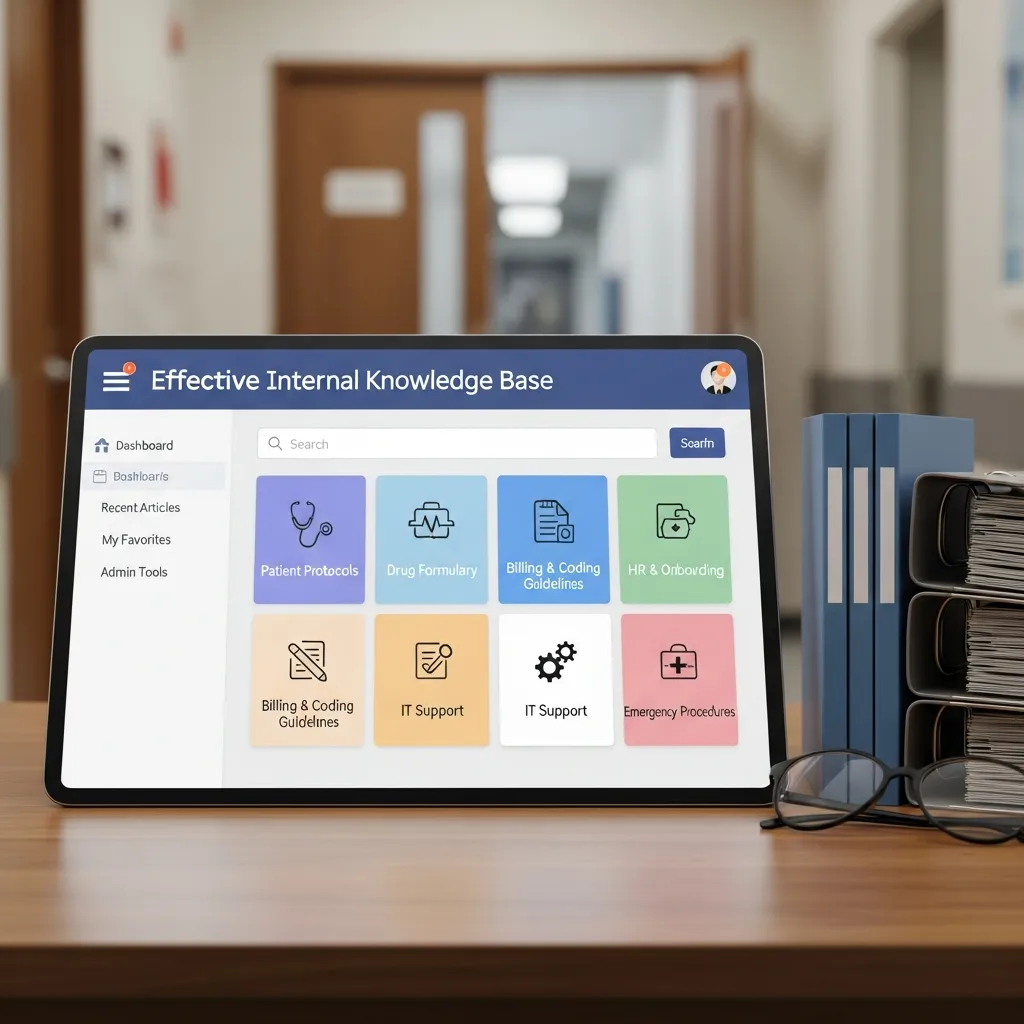 To truly support your medical staff, your knowledge platform requires intelligent structure and robust technical capabilities. Simply uploading PDF documents to a shared drive will not yield the results your clinic needs. A well-designed internal knowledge base for clinics acts as a dynamic clinical support system, not just a static storage space.
Structured and Standardized Medical Data
Effective knowledge bases organize clinical information using universally recognized coding systems such as ICD-10 and SNOMED CT. This standardization ensures consistency across diagnoses, treatments, and documentation, making it easier for healthcare professionals to retrieve accurate information quickly.
When properly implemented, a nurse or physician can enter a symptom, diagnosis, or medication into the search bar and instantly receive relevant protocols, treatment guidelines, and clinical references. This reduces time spent searching and increases time focused on patient care.
In addition, features like clear tagging, logical folder hierarchies, metadata indexing, and cross-referencing help transform large volumes of raw medical data into a structured, intelligent, and easily navigable system. This organization is essential for improving efficiency and reducing clinical errors in fast-paced healthcare environments.
Clinical Decision Support Integration
One of the most advanced features of a modern internal knowledge base for clinics is clinical decision support system (CDSS) integration. Instead of serving only as a reference library, the system actively supports healthcare providers during real-time patient care.
By integrating decision support tools, the knowledge base can automatically compare active prescriptions, patient history, and clinical guidelines. If a physician prescribes a medication that may interact negatively with another drug in the patient’s record, the system immediately generates an alert.
This real-time intelligence helps prevent medication errors, reduces adverse drug events, and improves patient safety. It also supports evidence-based decision-making by ensuring that clinicians always have access to the most up-to-date medical guidelines during consultations.
Improved Collaboration and Knowledge Sharing
A strong internal knowledge base for clinics also plays a vital role in improving communication and coordination between different healthcare departments. Physicians, nurses, pharmacists, lab technicians, and administrative staff can all access the same updated clinical information in real time. This shared access helps reduce misunderstandings, eliminates outdated practices, and ensures consistency in patient care across the entire healthcare system.
It also supports continuous knowledge updates, allowing hospitals and clinics to instantly distribute new treatment protocols, updated research findings, drug safety alerts, and revised hospital policies. Instead of relying on manual communication or paper-based updates, staff members can immediately access the latest clinical guidelines whenever needed. This improves decision-making speed and enhances overall patient safety.
Intuitive Search and Mobile Accessibility
In a clinical environment, healthcare professionals are constantly moving between examination rooms, wards, emergency units, and nursing stations. Because of this fast-paced workflow, an internal knowledge base for clinics must be designed with mobility and ease of access in mind.
A modern system should feature a fully responsive, mobile-friendly interface that works seamlessly on smartphones, tablets, and desktop devices. This ensures that clinicians can quickly retrieve essential information at the point of care without delay.
An advanced search engine is also critical. It should be intuitive, fast, and capable of understanding medical terminology, abbreviations, and even partial inputs. For example, if a doctor types a shorthand medication name or symptom, the system should still return accurate and relevant results instantly.
Slow navigation or complex menus can disrupt clinical workflows, so simplicity and speed are essential. When properly designed, the knowledge base becomes a reliable bedside assistant that supports real-time clinical decisions.
Step-by-step guide to building an internal knowledge base for clinics
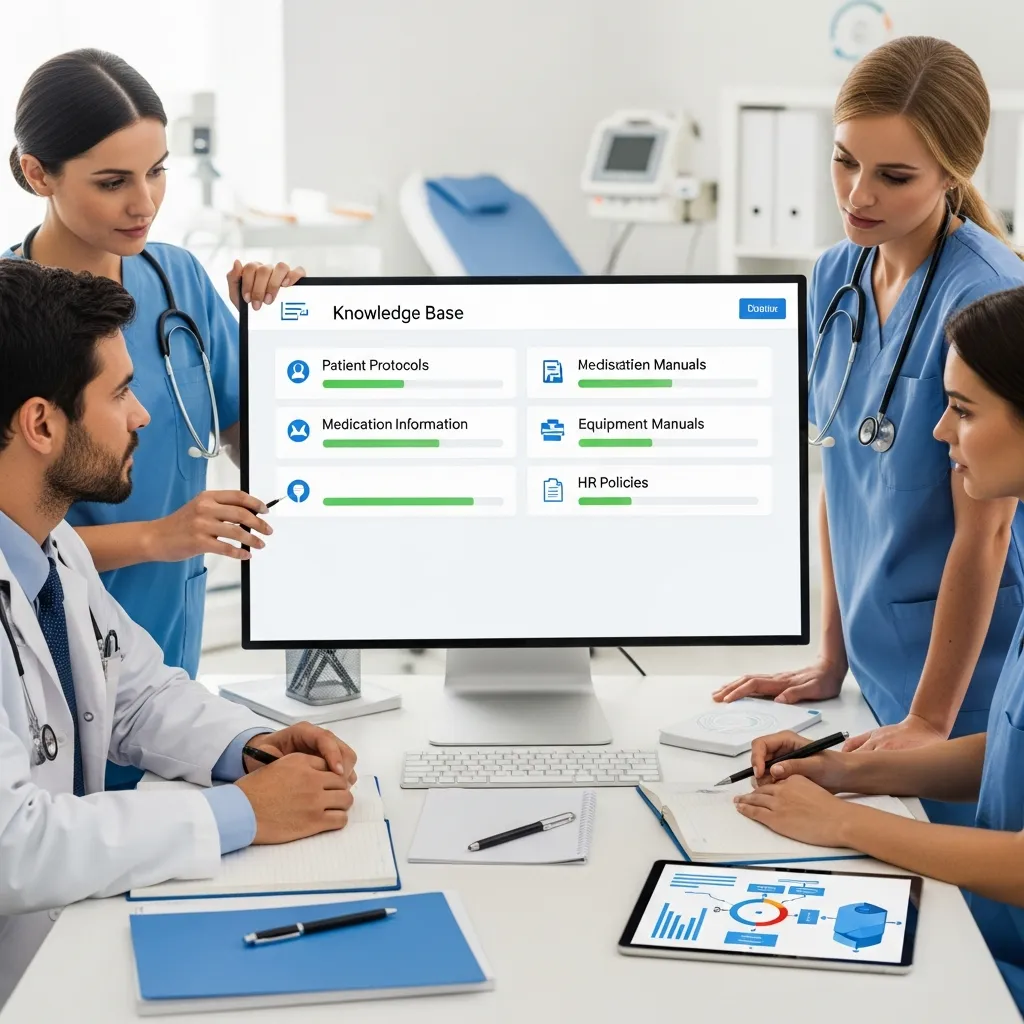 Building an internal knowledge base for clinics requires careful planning and collaboration across multiple departments. Following a structured implementation plan ensures that the final product actually meets the specific needs of your medical team.
Step 1: Assess your clinic’s specific needs
Before purchasing any software, evaluate the specific bottlenecks in your current clinical workflow. Talk to your physicians, triage nurses, and medical assistants. Ask them which protocols they struggle to locate and which administrative tasks consume the most time. Identifying these specific pain points allows you to prioritize the content you migrate into the new system first.
Step 2: Choose the appropriate platform architecture
Select a platform that scales with your organization and integrates seamlessly with your existing Electronic Health Record (EHR) system. Many organizations look to establish an epic clinical knowledge base architecture, which focuses on deep EHR interoperability and advanced algorithmic search capabilities. Ensure the vendor you choose complies strictly with data protection regulations and offers robust security features like encrypted access and role-based permissions.
Step 3: Organize and migrate your clinical data
Appoint a dedicated clinical governance team to review all existing protocols before they enter the new system. This is your opportunity to discard outdated policies and rewrite confusing guidelines. Structure the imported data with clear headings, bullet points, and standardized medical terminology. Organize the content into logical categories, such as emergency protocols, chronic disease management, pediatric care, and administrative procedures.
Step 4: Train your medical staff
Even the most advanced technology fails if your staff refuses to use it. Develop a comprehensive training program that demonstrates exactly how the new knowledge base saves time during a typical shift. Walk your team through specific scenarios, such as finding a pediatric dosing chart or locating the updated COVID-19 isolation protocols. Offer ongoing support during the first few weeks of rollout to help staff overcome their natural resistance to new technology.
Best Practices for Maintaining and Updating Your Internal Knowledge Base
A clinical knowledge base for clinics is not a static repository—it is a continuously evolving system that must be actively maintained to remain accurate, relevant, and trustworthy. If information becomes outdated or inconsistent, clinicians may quickly lose confidence in the platform and return to traditional, less efficient workflows. Therefore, strong governance and regular updates are essential for long-term success.
Establishing a Structured Review Cycle
One of the most important best practices is implementing a strict content review schedule. A governance committee or clinical review team should routinely audit treatment protocols, clinical guidelines, and operational procedures every six to twelve months. This ensures that all information remains aligned with the latest medical standards and internal hospital policies.
When major global health authorities such as the World Health Organization (WHO), Centers for Disease Control and Prevention (CDC), or national medical boards release updated guidelines, the internal knowledge base for clinics should be updated immediately. Delayed updates can lead to outdated practices being used in patient care, increasing the risk of medical errors.
Managing Content Versioning and Archiving
Proper version control is critical in a clinical environment. Outdated or superseded protocols should not remain accessible in active search results. Instead, they should be clearly archived while maintaining a traceable history for reference purposes.
Storing multiple conflicting versions of the same clinical guideline can create confusion, especially in emergency situations where quick decisions are required. A well-maintained internal knowledge base for clinics should always present the most current and validated version of any clinical document as the default.
Encouraging Continuous Staff Feedback
Frontline healthcare workers play a key role in identifying gaps or issues within the system. Encouraging active feedback helps ensure continuous improvement of the knowledge base.
Features such as a “flag this article” or “report an issue” button allow nurses, physicians, and administrative staff to quickly report outdated content, broken links, unclear instructions, or missing information. This real-time feedback loop helps maintain accuracy and improves usability over time.
In addition, periodic surveys and user engagement analytics can help administrators understand how effectively the system is being used and where improvements are needed.
Ensuring Clinical Accuracy and Consistency
All updates should be reviewed and validated by qualified medical professionals before being published. This ensures that every piece of information within the internal knowledge base for clinics meets clinical safety standards and aligns with evidence-based medicine.
Consistency across departments is also essential. Standardized formatting, terminology, and documentation practices help reduce misinterpretation and improve communication between healthcare teams.
Measuring the Impact of an Internal Knowledge Base on Clinic Efficiency and Patient Care
Securing long-term funding and institutional support for an internal knowledge base for clinics requires clear, measurable evidence of its effectiveness. Healthcare administrators and stakeholders need quantifiable data to demonstrate how the system improves both operational efficiency and patient outcomes. By tracking the right performance indicators, clinics can clearly evaluate the return on investment and justify continued development of their knowledge management initiatives.
Monitoring System Usage and Staff Efficiency
One of the first areas to evaluate is system usage analytics. Clinics should track how frequently healthcare professionals access specific clinical guidelines, treatment protocols, or standardized order sets. High search volumes for particular topics may highlight gaps in staff training or areas where additional clinical education is needed.
Another important metric is documentation efficiency. Measuring the average time it takes for physicians and nurses to complete clinical documentation before and after implementing the internal knowledge base provides direct insight into workflow improvements. A well-optimized system should significantly reduce administrative burden, allowing clinicians to spend more time on direct patient care.
Reduced duplication of work, faster information retrieval, and improved workflow consistency are all strong indicators that the internal knowledge base for clinics is functioning effectively.
Tracking Patient Safety and Clinical Outcomes
Beyond operational efficiency, the most important impact of any healthcare system is patient safety. Clinics should closely monitor key safety indicators such as the rate of adverse drug events, medication errors, and treatment complications.
A properly integrated knowledge base—especially one connected with clinical decision support tools—should help reduce these risks by providing real-time alerts and evidence-based guidance during patient care.
In addition, organizations should evaluate hospital readmission rates, average length of stay, and patient recovery outcomes. Improvements in these metrics often reflect better coordination, more accurate clinical decisions, and standardized care pathways supported by the knowledge system.
Data-Driven Improvements in Healthcare Quality
Institutions that implement structured clinical data systems and knowledge management platforms often experience measurable improvements in overall healthcare quality. Better access to updated clinical guidelines leads to more consistent treatment decisions across providers and departments.
Research findings, including studies referenced by institutions such as the National Institutes of Health (NIH), consistently show that clinical decision support systems and organized medical knowledge platforms are associated with improved patient safety, reduced medical errors, and higher standards of care delivery.
These outcomes reinforce the importance of investing in digital knowledge infrastructure within healthcare environments.
Shaping the Future of Clinical Knowledge Management
 Organizing your medical data is the first crucial step toward building a safer, more resilient healthcare organization. An internal knowledge base for clinics removes the daily friction that slows down your medical staff, allowing them to focus their full attention on the patients sitting in front of them.
As healthcare technology continues to advance, these centralized repositories will become even more powerful, eventually incorporating predictive analytics and artificial intelligence to assist with complex diagnostic challenges. Take the time to audit your current clinical workflows today. Form a governance committee, evaluate your isolated data silos, and begin mapping out a unified strategy. Providing your team with the right information at the exact right moment is the most effective way to elevate your standard of care.
