


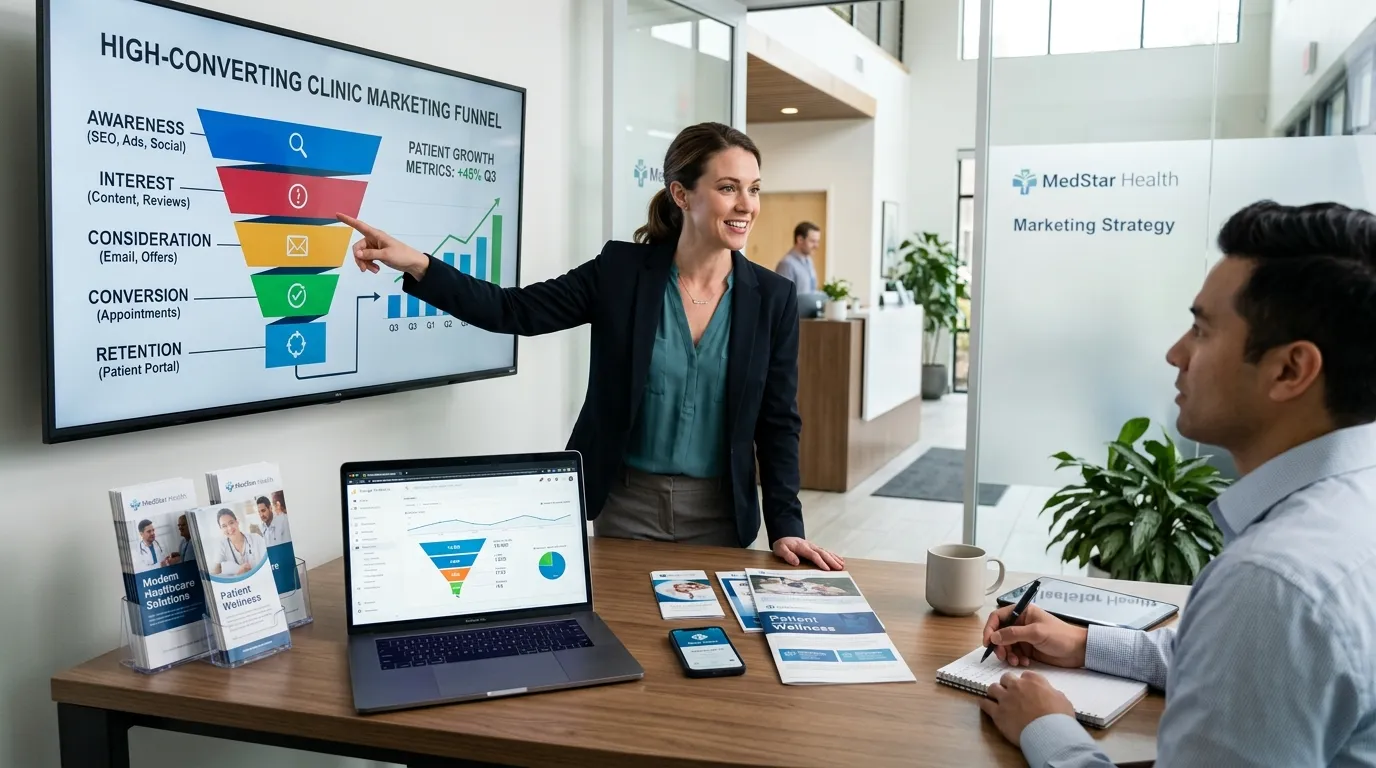
A clinic marketing funnel is a strategic patient journey that guides individuals from initially discovering your medical practice to booking an appointment and becoming loyal patients. Building this funnel requires optimizing local SEO, creating educational content, and streamlining the booking process to ensure consistent clinic growth.
Patient acquisition requires a highly structured approach. People seeking medical care do not simply choose the first practice they see online. They research symptoms, compare local providers, read patient reviews, and carefully evaluate their options before ever making a phone call or booking an appointment. This complex decision-making process means healthcare providers need a systematic way to guide potential patients through every step of their journey.
Implementing a structured clinic marketing funnel gives your practice a predictable method for attracting and retaining patients. By mapping out the exact steps a person takes before entering your waiting room, you can deliver the right message at the right time. A well-designed funnel captures attention early, builds trust through valuable information, and removes friction when the patient is finally ready to schedule a consultation.
This comprehensive guide explores how to build, measure, and optimize a highly effective patient acquisition system. You will learn the specific strategies required for each stage of the patient journey, from initial brand awareness to long-term patient advocacy. By applying these principles, your medical clinic can move away from unpredictable marketing tactics and establish a reliable engine for sustainable business growth.
What exactly is a clinic marketing funnel and how does it work?
 A clinic marketing funnel is a strategic framework that visualizes the patient journey, mapping the path a person takes from realizing they have a health concern to becoming a loyal patient at your practice. The funnel model represents the gradual narrowing of your audience; while many people may discover your clinic online, a smaller percentage will engage with your content, and an even smaller, highly qualified group will ultimately book an appointment.
A structured healthcare marketing funnel is essential for modern clinics because medical decisions are inherently high-trust transactions. Patients need reassurance, clear communication, and demonstrated expertise before trusting a provider with their health. The funnel ensures your clinic provides that necessary reassurance at every stage of the decision-making process.
The traditional clinic marketing funnel consists of five distinct stages. The Awareness stage focuses on attracting potential patients to your brand. The Interest stage involves engaging those prospects with valuable medical information. The Consideration stage guides them toward choosing your specific clinic. The Retention stage focuses on fostering long-term relationships after the initial visit. Finally, the Advocacy stage turns satisfied patients into active referrers who bring new people into the top of your funnel.
How do you attract potential patients to your clinic marketing funnel?
The Awareness stage is the top of the funnel. At this point, prospective patients are actively searching for solutions to their medical problems, but they do not yet know your clinic exists. Your primary goal is to capture their attention and introduce your medical practice as a credible authority.
How do you understand your target audience?
Before launching any awareness campaigns, you must understand exactly who you are trying to attract. A pediatric clinic requires a vastly different marketing approach than a cosmetic surgery center. Creating detailed patient personas helps clarify the specific demographics, health concerns, and online behaviors of your ideal patients. When you know what questions your patients are asking, you can create targeted content that provides the exact answers they need.
What are the best strategies for building clinic awareness?
To fill the top of your healthcare marketing funnel, you must deploy a mix of organic and paid visibility strategies.
Search Engine Optimization (SEO) for Clinics: Patients heavily rely on search engines to find medical information. Optimizing your website with relevant keywords ensures your clinic appears in local search results. Creating dedicated pages for specific treatments, conditions, and services helps search engines index your site accurately, driving highly qualified organic traffic to your digital front door.
Content Marketing: Educational content is a powerful tool for patient acquisition. Publishing informative blog posts, explainer videos, and visual infographics allows your clinic to address common health concerns. When a prospective patient searches for “how to treat chronic lower back pain” and finds a detailed, helpful video from your physical therapy clinic, you immediately establish authority and brand awareness.
Social Media Marketing for Patient Engagement: Social media platforms allow clinics to reach patients in a more casual, engaging environment. Sharing clinic updates, physician introductions, and wellness tips on platforms like Facebook and Instagram helps humanize your practice.
Local SEO and Google My Business Optimization: For brick-and-mortar medical practices, local SEO is critical. Claiming and optimizing your Google Business Profile ensures your clinic appears in the highly visible “Local Pack” map results. Keeping your name, address, phone number, and operating hours consistent across all online directories improves your local search rankings significantly.
Online Advertising: Pay-Per-Click (PPC) and display advertisements provide immediate visibility. Running Google Ads for high-intent search terms like “urgent care near me” places your clinic at the top of the search results exactly when a patient needs immediate assistance.
Public Relations and Media Outreach: Earning mentions in local news outlets or contributing expert commentary to health publications boosts your clinic’s credibility and expands your reach within the community.
How do you measure awareness stage success?
To ensure your awareness strategies are working, track metrics such as total website traffic, unique new visitors, social media reach, and brand mentions. An increase in these metrics indicates that more people are discovering your clinic and entering the top of your funnel.
How can your medical practice engage prospective patients effectively?
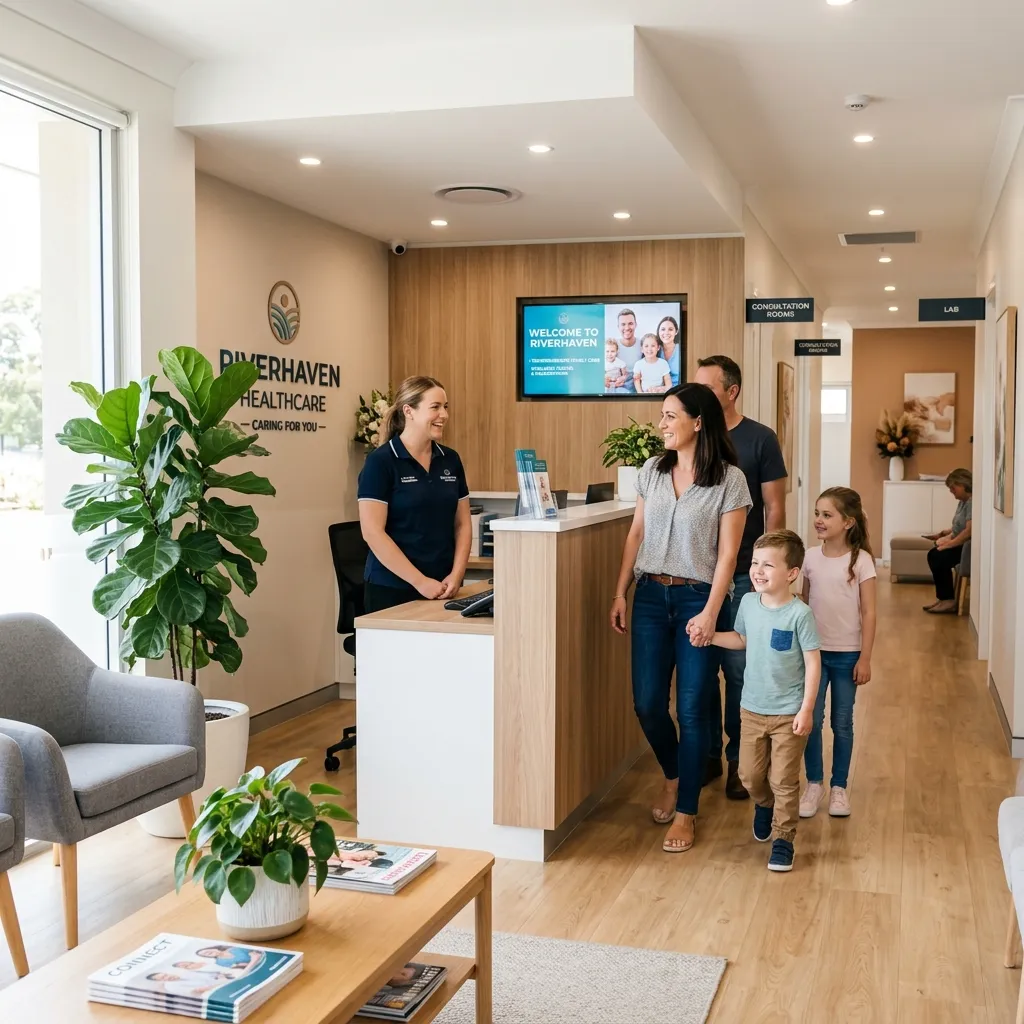 Once potential patients know your clinic exists, they enter the Interest stage. They are evaluating their options and determining if your practice is the right fit for their specific needs. During this phase, you must nurture these leads by providing valuable, engaging content.
What methods nurture leads with valuable content?
Engagement requires providing resources that help patients make informed decisions about their healthcare.
Educational Resources: Offering downloadable e-books, comprehensive whitepapers, or live webinars provides immense value to patients researching complex procedures. For example, a fertility clinic might offer a free downloadable guide on what to expect during the IVF process.
Patient Testimonials and Case Studies: Healthcare decisions are driven by trust. Reading about other patients who have successfully overcome similar health challenges provides powerful reassurance. Video testimonials and detailed case studies demonstrating successful outcomes help prospective patients feel more confident in your clinical expertise.
Clinic Tours and Physician Bios: Medical anxiety is very real. Providing high-quality video tours of your facility and detailed biographies of your medical staff helps demystify the patient experience. When patients feel familiar with your doctors and your clinic environment before their first visit, they are far more likely to book an appointment.
Interactive Tools: Tools like online symptom checkers, body mass index calculators, or treatment cost estimators keep users engaged on your website longer, increasing the likelihood that they will take the next step.
How do you build trust and credibility?
Online Reviews and Reputation Management: A high volume of positive online reviews is one of the strongest engagement tools available. Actively managing your reputation by requesting reviews from satisfied patients and responding professionally to all feedback demonstrates that your clinic values patient care.
Personalized Email Marketing Campaigns: Email remains an effective way to nurture patient relationships. Sending automated, personalized email sequences to individuals who downloaded your resources keeps your clinic top-of-mind as they consider their healthcare options.
What are the key metrics for the interest stage?
Monitor your overall engagement rate, the number of lead magnet downloads, email open rates, and time spent on your website. High engagement in these areas shows that your content is successfully holding the interest of prospective patients.
What strategies convert prospects into actual patients?
The Consideration stage is the critical tipping point of the medical clinic lead generation funnel. Prospective patients have gathered their information, evaluated their options, and are now ready to make a decision. Your objective is to remove all friction from the booking process and convert these warm prospects into actual patients.
How do you guide patients towards decision-making?
Clear Calls to Action (CTAs): Your website must tell users exactly what to do next. Prominent, clear CTAs like “Schedule a Consultation,” “Book Online Now,” or “Call Our Clinic” should be visible on every page of your site.
Online Appointment Scheduling: In modern healthcare, convenience is a major differentiator. Integrating a secure online appointment booking system allows patients to schedule their visits 24/7 without needing to make a phone call during busy operating hours.
Free Consultations or Introductory Offers: For high-ticket services like cosmetic dentistry or elective surgeries, offering a complimentary initial consultation significantly lowers the barrier to entry. This allows patients to meet the provider and discuss their concerns without financial risk.
Personalized Follow-ups: If a prospective patient fills out a contact form but does not finalize an appointment, a prompt follow-up call or text message from your administrative team can secure the booking.
How do you optimize conversion paths?
Optimizing the medical clinic lead generation funnel requires streamlined landing pages and website forms. Ensure your forms only ask for essential information to avoid overwhelming the user. A landing page dedicated to a specific treatment should directly address the patient’s primary concerns, display relevant testimonials, and feature a simple, secure booking form.
What metrics measure consideration and conversion?
Track the total number of appointment bookings, website conversion rates, and consultation requests. Analyzing these metrics helps identify any drop-off points where prospective patients abandon the booking process.
Why is patient retention critical for long-term clinic growth?
 The patient acquisition funnel for clinics does not end once an appointment is booked. The Retention stage focuses on fostering long-term relationships, ensuring that patients return to your practice for their future healthcare needs. Retaining an existing patient is significantly more cost-effective than acquiring a new one.
How do you implement strategies for patient loyalty?
Exceptional Patient Experience: Retention is primarily driven by the quality of care provided. Minimal wait times, compassionate communication from staff, and clean, comfortable facilities all contribute to an outstanding patient experience.
Regular Communication: Keeping in touch with patients between visits builds loyalty. Sending a monthly health newsletter, seasonal wellness tips, or updates about new clinic services keeps patients engaged with your brand.
Follow-up Care and Preventive Reminders: Proactive healthcare communication shows patients that you care about their long-term well-being. Automated SMS or email reminders for annual check-ups, flu shots, or routine screenings encourage repeat visits.
Patient Feedback and Surveys: Sending a brief satisfaction survey after an appointment allows you to gather valuable insights. It also demonstrates to patients that their opinions matter and helps you address any operational issues promptly.
How do you measure patient retention?
Key retention metrics include Patient Lifetime Value (PLV), the frequency of repeat visits, and patient churn rate. Consistently high retention metrics indicate that your clinic is delivering excellent care and effective follow-up communication.
How do you turn satisfied patients into advocates for your clinic?
The final stage of the clinic marketing funnel is Advocacy. In this stage, highly satisfied patients actively promote your clinic to their friends, family, and online networks. Patient advocacy acts as a powerful growth engine, effectively feeding new, highly qualified prospects back into the top of your funnel.
How do you encourage patient referrals and testimonials?
The most direct way to generate referrals is simply to ask. Train your administrative staff and physicians to ask happy patients to leave a review or refer a friend. You can also implement a formal referral incentive program, offering small rewards or discounts on elective services for successful referrals.
How do you leverage social proof and online communities?
Encourage patients to share their positive experiences on their own social media channels. You can also build an online community, such as a private Facebook group for patients managing a specific chronic condition, which fosters peer-to-patient support and strengthens their connection to your clinic.
What metrics measure patient advocacy?
Track the number of new online reviews generated each month, social media shares of your clinic’s content, and the total number of new patients acquired through direct referrals.
What are the best ways to build and optimize your clinic marketing funnel?
Building a high-performing clinic marketing funnel requires the right technology and a commitment to continuous improvement.
How do you integrate technology into your marketing efforts?
Implementing a Customer Relationship Management (CRM) system is vital. A healthcare-compliant CRM allows your clinic to track patient interactions, manage leads, and automate email follow-ups efficiently. Marketing automation tools ensure that communication flows smoothly without placing an administrative burden on your front desk staff.
Why is data analysis and A/B testing important?
To maximize the efficiency of your funnel, you must continuously test different elements. A/B testing involves running two variations of a webpage, email subject line, or advertisement to see which version performs better. By relying on hard data rather than assumptions, you can systematically increase your conversion rates over time.
What is the role of a unified marketing strategy?
All components of your funnel must work together seamlessly. An integrated healthcare marketing strategy ensures that your messaging remains consistent across SEO, social media, paid advertising, and patient communication. When all channels align, the patient experience feels cohesive and professional from the first click to the final follow-up.
How do you overcome common challenges in healthcare marketing?
 Operating a successful clinic marketing funnel comes with distinct industry challenges that require careful navigation.
How do you handle intense local competition?
Medical markets are often highly saturated. To overcome competition, you must clearly define your unique value proposition. Highlight specialized treatments, extended operating hours, or superior patient experience metrics. You can also explore specific tactics tailored to your niche, such as evaluating the best marketing channels for cosmetic clinics if you operate in the aesthetics space.
How can clinics manage budget constraints?
Marketing budgets can be tight, especially for independent practices. Prioritize channels with the highest return on investment, such as local SEO and automated email retention campaigns. Once these foundational elements are generating revenue, you can reinvest profits into paid advertising to scale your growth.
How do you ensure regulatory compliance?
Healthcare marketing is heavily regulated. In the United States, all patient communication and data handling must comply with HIPAA regulations. You must ensure that your CRM, booking systems, and email platforms use secure, encrypted data transmission. For a deeper understanding of compliant communication systems, review resources on secure healthcare communication channels to protect patient privacy at all times. Always consult with legal counsel to verify that your marketing practices adhere to local healthcare advertising laws. For further guidance on national privacy standards, refer to the U.S. Department of Health & Human Services.
Conclusion
A well-optimized clinic marketing funnel fundamentally changes how a medical practice operates. Instead of relying on unpredictable word-of-mouth or disjointed advertising campaigns, a structured funnel creates a reliable, measurable system for patient acquisition. By carefully guiding individuals through the stages of awareness, interest, consideration, retention, and advocacy, healthcare providers can build deep trust and long-lasting patient relationships.
Sustainable clinic growth requires a commitment to understanding the patient journey and continuously refining your communication strategies. Implement these funnel stages systematically, track your data closely, and focus always on delivering exceptional patient value.
Frequently Asked Questions
1. What is a clinic marketing funnel?
A clinic marketing funnel is a strategic system that maps the patient journey. It guides potential patients from initially discovering your clinic online, through engaging with your educational content, to ultimately booking an appointment and becoming a loyal patient.
2. Why does a medical practice need a marketing funnel?
A structured funnel ensures your marketing efforts are intentional and measurable. It helps you attract qualified leads, build patient trust systematically, and prevents potential patients from abandoning the booking process due to friction or lack of information.
3. How do I attract more patients to the top of my funnel?
You can attract more patients to the awareness stage by optimizing your website for local SEO, claiming your Google Business Profile, publishing helpful medical blog posts, and running targeted Google Ads for high-intent search terms.
4. What is a lead magnet in a healthcare marketing funnel?
A lead magnet is a valuable, free resource offered in exchange for a prospective patient’s contact information. Examples include downloadable e-books on specific treatments, free symptom checklists, or access to an exclusive educational webinar.
5. How can I improve my clinic’s appointment booking conversion rate?
Improve your conversion rate by offering secure, 24/7 online appointment scheduling, placing clear Calls to Action (CTAs) on every website page, and ensuring your landing pages directly address patient concerns and display positive reviews.
6. What role does email marketing play in a clinic marketing funnel?
Email marketing is highly effective for nurturing leads in the interest stage and retaining existing patients. Automated email sequences can provide educational content, send appointment reminders, and request post-visit feedback.
7. How do I retain patients after their first visit?
Patient retention relies on exceptional clinical care combined with proactive communication. Sending regular health newsletters, automated reminders for preventive screenings, and providing a seamless administrative experience keeps patients loyal.
8. How can I turn existing patients into advocates for my clinic?
You can turn patients into advocates by consistently delivering outstanding care, asking satisfied patients for online reviews, and implementing a structured referral program that incentivizes patients to recommend your clinic to their network.
9. What metrics should I track to measure my funnel’s success?
Important metrics include website traffic, local search rankings, lead magnet downloads, online appointment bookings, patient retention rates, and the total cost to acquire a new patient.
10. How do I ensure my clinic marketing funnel is legally compliant?
Ensure compliance by using HIPAA-compliant software for patient data collection, securing your website with SSL encryption, obtaining clear consent before sending marketing emails, and avoiding guaranteed outcome claims in your advertising copy.
